


When outdoor temperatures drop, electricity use naturally rises. Colder weather drives us indoors, where we rely more heavily on home heating systems, more lighting and household appliances. Heating systems run longer and more frequently to maintain comfortable indoor temperatures. Combine that with the fact that most people use electricity at the same times—typically in the mornings and early evenings—and the result is significant pressure on our electric grid.
Central Wisconsin Electric Cooperative (CWEC) works closely with our energy supplier to plan for these seasonal weather patterns and changes and ensure you have reliable power every day of the year. This partnership involves detailed resource and infrastructure planning to make certain electricity is available whenever you need it. However, it’s important to remember that our local system is part of a much larger regional and national electric grid.
During the winter months, when homes and businesses across the country are using more electricity simultaneously, overall demand can approach—or occasionally exceed—available supply. This is especially true during severe weather events, such as ice storms, sudden temperature drops or equipment malfunctions that reduce generation capacity. In rare cases when demand threatens to outpace supply, the regional grid operator may call for temporary, controlled outages—often referred to as rolling blackouts—to prevent broader system failures. If such a situation were to ever arise, CWEC will provide timely updates and information to members.
To prepare for these scenarios and minimize risks, CWEC and our G&T partner take proactive measures to strengthen reliability year-round. These include routine system maintenance, investments in grid modernization and comprehensive disaster response planning. In addition, CWEC contracts with a company to do vegetation management around the power lines in the CWEC territory. The co-op also works to bury powerlines, when possible, to help reduce the amount of power outages.
These proactive steps are designed to ensure our portion of the grid remains resilient even under extreme conditions. Yet, maintaining a reliable electric system requires a collective effort—and every member plays an important role in lowering demand when the grid is under stress.
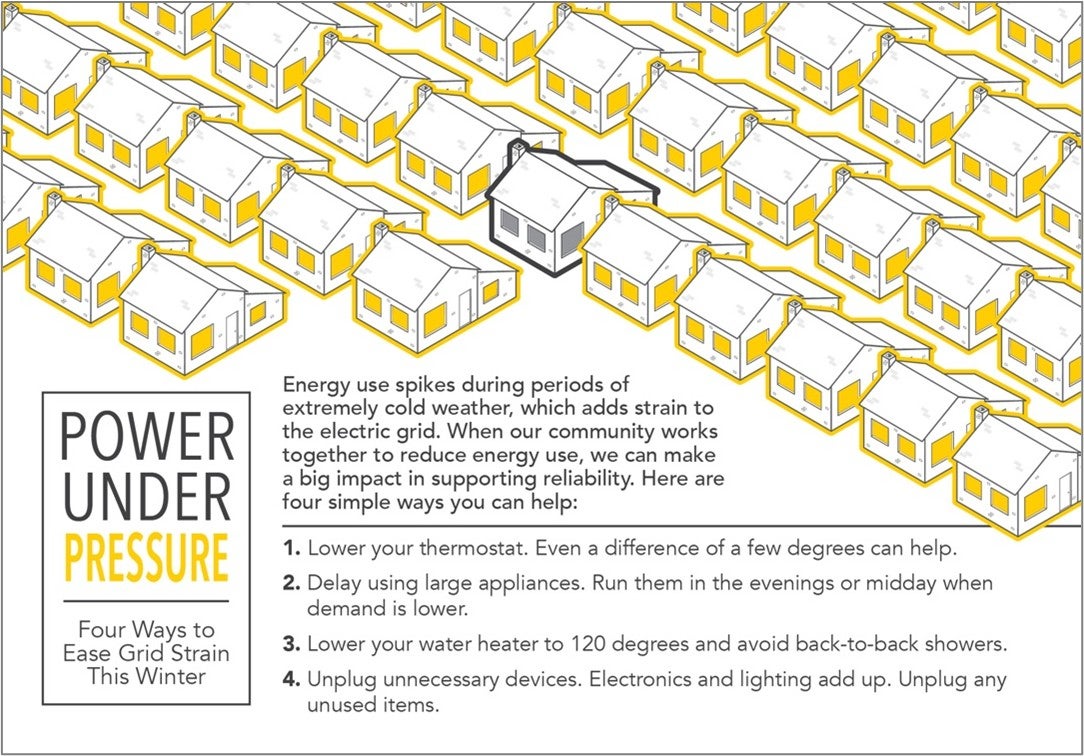
You can help by taking simple actions during periods of high electricity use, especially when temperatures drop:
- Lower your thermostat slightly. Even reducing the temperature by a few degrees can help.
- Delay using large appliances during peak hours. Run dishwashers, washing machines and dryers during off-peak hours—typically midday or late evening.
- Adjust your water heater. Setting it to 120 degrees F and spacing out showers helps conserve both energy and hot water.
- Unplug unnecessary devices. Power used for lighting and electronics adds up and accounts for a significant portion of home energy use. Disconnect unused items to reduce energy waste.
Understanding how weather impacts electricity demand is key to maintaining system reliability. By practicing simple energy conservation habits at home, you not only save money on your monthly bill—you also help strengthen the resilience of the grid that powers our community. Together, through small actions and shared awareness, we can ensure that our homes remain warm, our lights stay on and our local grid continues to serve us reliably throughout the season.